Why an additional wide field lens?
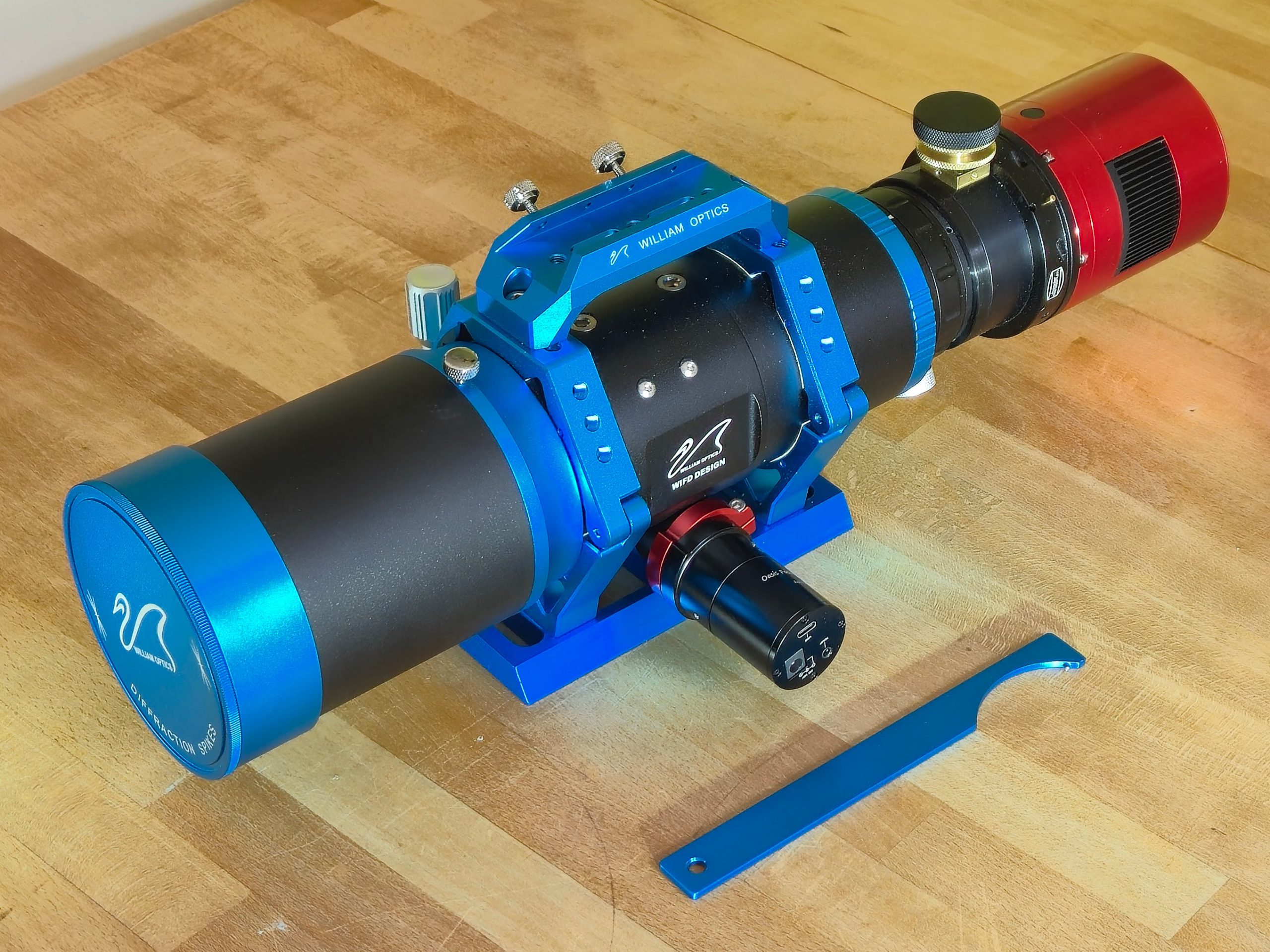
This section explains how I acquired the William Optics Pleiades 68. The photo on the left shows the instrument in its first complete configuration—the setup it reached following the commissioning process described in this section. The optical train is optimized for use with a Baader Universal Filter Changer and an off-axis guider. Additionally, the telescope is equipped with an Oasis Astro Focuser Rose and a custom-made 3-inch dovetail bar to ensure compatibility with my mounts. Lying in front of the telescope is a wrench I machined for loosening and tightening the P68’s cross-nut.
The Canon lens
The Canon EF 200mm f/2.8 L I USM is a good lens for wide-angle shots. It’s pretty small, and in the meantime, I’ve managed to adapt it to almost every camera I’ve used. The downside could—if you’re being very picky—be the image quality. Certainly, the optical performance of this lens is overall definitely one of the best in its class. However, I find that even when stopped down to f/4, the corner performance on full-frame is quite poor. The sharpness across the field is good too, but certainly not outstanding. To be fair, though, this is an extremely handy full-frame lens, which was also designed for sensors that had significantly larger pixels than those commonly used in astrophotography today.
The Esprit
The Skywatcher Esprit 100 ED delivers pretty good image performance when combined with a full-frame sensor. Even though the design of this telescope is now over a decade old (as of 2026), it’s still my preferred wide-angle lens. While the reduced focal length of 415 mm isn’t exactly super wide, I expect to keep this telescope in my toolkit for a long time. Nowadays, I mostly use the Esprit with the Riccardi Reducer, which gives an f/4.15 system. If you really want to find a downside, you have to mention the large size of the OTA. With the 3″ Feather Touch from Starlight Instruments, the OTA weighs 7.8 kg. When setting it up, you can already tell that you’re not dealing with the 200mm Canon.
The Idea for a Way Out
Around 2024 and 2025 new telescopes appeared on the market. They all have quite fast focal ratios in the range from 1:3.5 to 1:5.6. I haven’t conducted any scientific studies, but I believe almost all models are made in the Far East. Since this new generation telescopes appeared on the market I struggled with the temptation to improve my wide field set-up…
Design Criteria for the new lens
A possible telescope should meet the following design criteria:
- The weight shall be significantly smaller than the weight of my Esprit, probably the half.
- The image quality should be excellent, even at the corners of a full-frame sensor. The diameters of the spot diagram shall match to small pixel sizes of current CMOS sensors.
- It is not acceptable to obtain only good images from the outset by using deconvolution processes as, e.g., BlurXTerminator.
- The scope shall have a fast focal ratio in the range of 1:4
Possible Candidates
The table gives an overview of some scopes meeting the above given criteria more or less.
| Scope | Vendor | m [kg] | D [mm] | f [mm] | f/D | FOV [mm] |
|---|---|---|---|---|---|---|
| EF-L 200 I USM | Canon | 1,0 | 50 | 200 | 4,0 | 45 |
| SQA55 | Askar | 2,2 | 55 | 260 | 4,7 | 45 |
| Hope D60 | Touptek | 3,5 | 60 | 280 | 4,7 | 44 |
| SpaceCat61 | William Optics | 3,4 | 61 | 300 | 4,9 | 44 |
| FCT-65D | Takahashi | 3,0 | 65 | 260 | 4,0 | 45 |
| Pleiades 68 | William Optics | 3,8 | 68 | 260 | 3,8 | 48 |
| SQA70 | Askar | 3,5 | 70 | 336 | 4,8 | 44 |
| Esprit 100ED mod. | Skywatcher | 7,8 | 100 | 415 | 4,2 | 44 |
Finally two candidates remained, the Takahashi FCT-65D with its Fluorit Reducer and the William Optics Pleiades 68. There a few reviews in the net and some threads at CN and A.de dealing with these scopes. In my experience especially the threads of the astronomy forums have to be read and evaluated very carefully. Both telescopes have been discussed regarding their imaging performance, but most of the authors didn’t had full frame sensors in consideration. It seems both telescopes might be able to generate excellent images. Additionally both telescopes seem to be difficult to operate and might behave slightly bitchy, as well.
Ultimately, I decided on the Pleiades 68. Basically two reasons led to this decision: The first is, that the P68 probably has a more solid mechanics, while the FCT-65D comes more old-fashioned, especially the focuser. The second is, that TS offered a certain amount of flexibility regarding the right of return, if the scope would not meet my expectations.
Setting the Pleiades 68 to work
A quick check of the Pleiades 68
Quick Set-Up
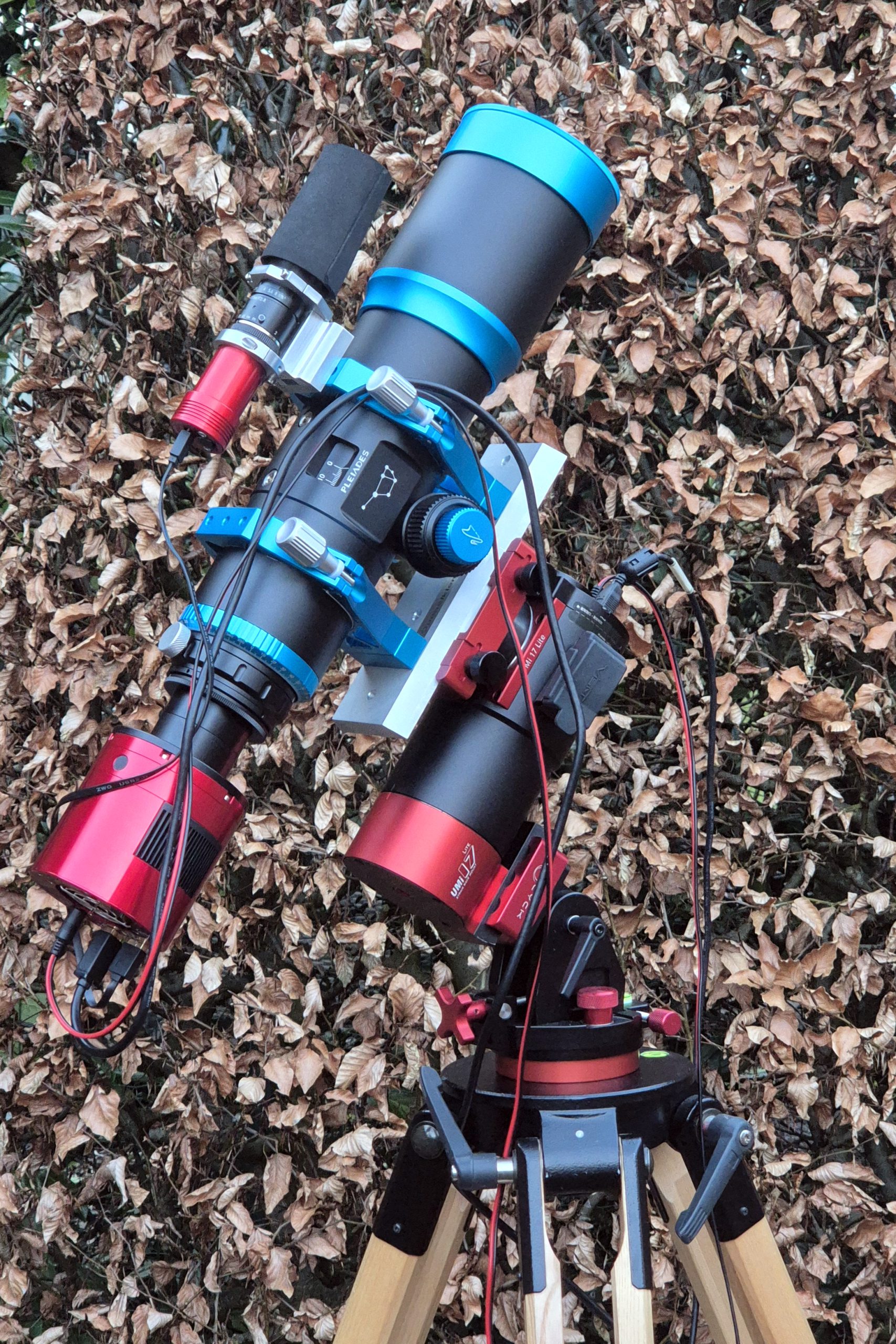
The Pleiades 68 arrived and the impossible happened: the following nights were cloudless and I could set the scope to work. Since I didn’t now, whether I had to return the scope I replaced all dovetail clamping stuff by own made parts. This way I could be sure not to leave any marks or scratches on the device. For the first tests I used a simple mini guider. The guider consists of an 100mm f/2.8 Kowa lens with a ZWO ASI 290mm mini. This guiding set-up worked set-up successful at different telescopes up to 660 mm focus length (probably even longer would work, but I never tried).
Regarding the mechanics I did not find anything to complain about. At most, one might ask whether the WFID focuser of the P68 can be repaired in a case just like a regular focuser. The focuser moves the front lens group, while the camera facing lens remains fixed.
The camera is an ASI 6200MC pro. During the first nights it was mounted directly using the original ZWO adapter set which comes with the camera. It delivers exactly 55 mm back focus and does not incorporate any filters. At that time, I still believed the 55 mm specification given by William Optics and thought I could find the correct back focus by inserting 0.2 mm spacers. I would later learn otherwise.
My UMI 17L carries the optical tube assembly with guider and camera. Even though this mount easily supports the considerably heavier Esprit 100, it feels significantly more liberated. Overall, it’s a much more relaxed system. I can now take the entire telescope, including the Berlebach tripod, and carry it into the shed. That wasn’t possible with the Esprit.
Imaging Performance
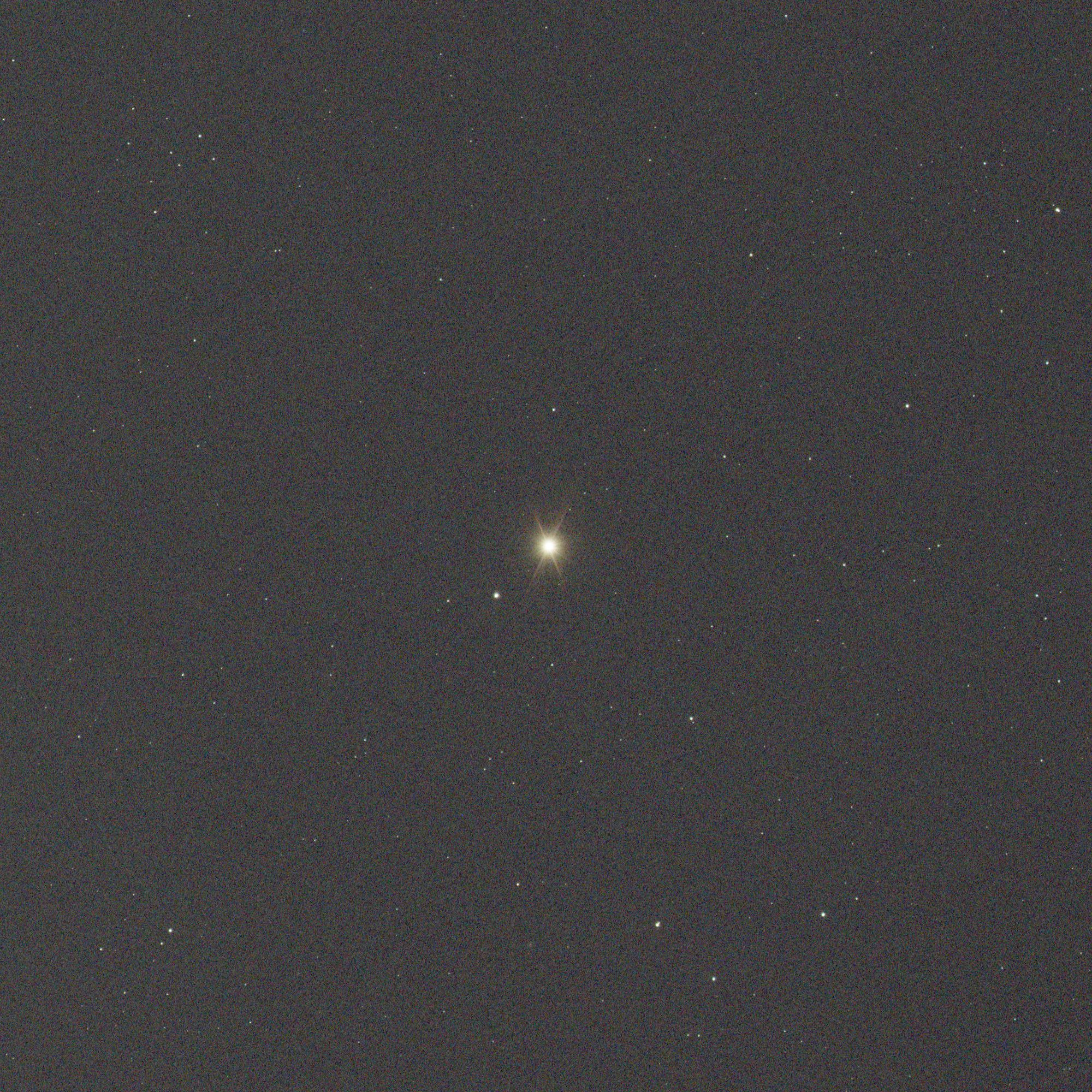
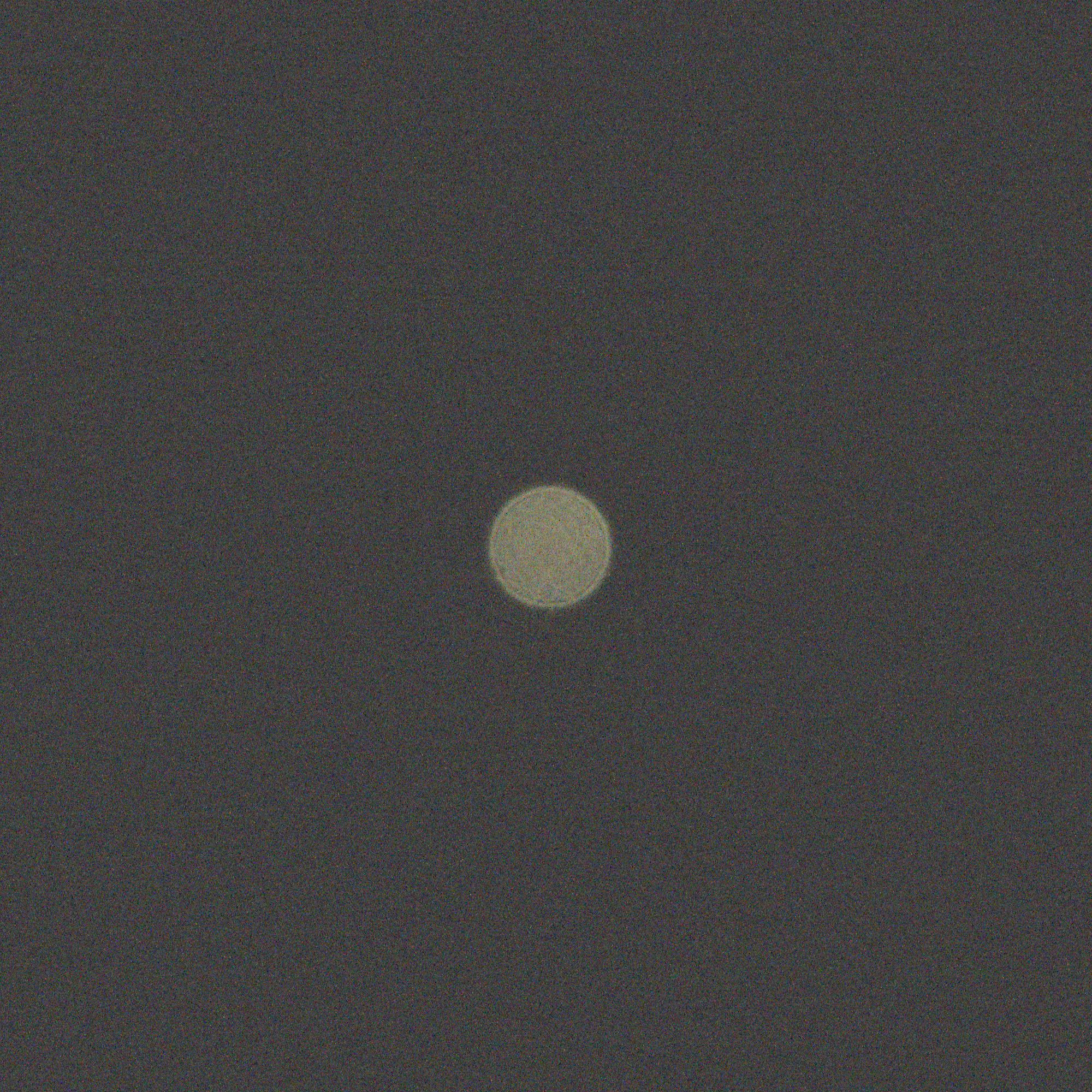
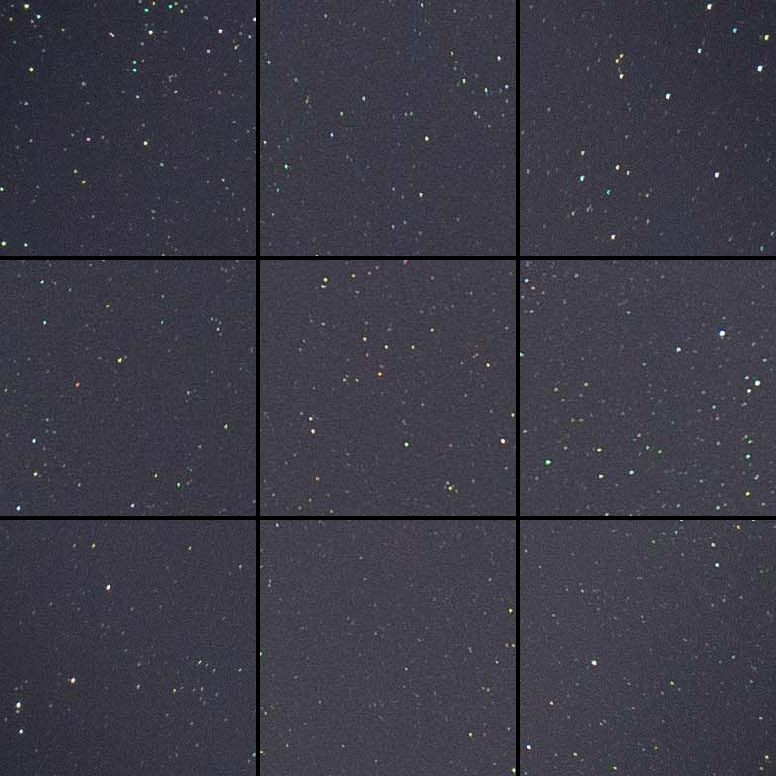
Out of the box the Pleiades 68 showed good but no convincing imaging performance. The star in focus showed strange „spikes“, but out of focus the star image seemed quite perfect. Investigations with a Canon EOS 5Da showed that these „spikes“ are caused by the ASI6200 MC, furthermore I could reveal that these „spikes“ rotate with the camera. Surprisingly I didn’t observed these „spikes“ at later test exposures anymore. I can remember, that I had this issue sometimes at my Newton, as well. But back then I thought that they were caused by my off-axis guider and I did not take any measures. I think they only occur when the tracking accuracy is extraordinarily good.
Check of the Pleiades 68 with an improved Set-Up
Camera Collimation Rig
My tests revealed that the orthogonality of the camera sensor might not be perfect. Hence I put the ASI 6200 into my collimation rig in order to optimise the sensor orthogonality. The rig is a simple wooden rig applying the principle which Starlight Xpress explains on this page.
Set-UP
The second test series uses a modified image train, built around the Baader UFC. This allows to incorporate filters. Furthermore this image train is already similar to the set-up intended for later use. In the following a 50.8 mm clear glass filter with thickness of 2 mm was placed in the image train during all tests.
| Pos. | Element | Distance / mm |
| 1 | ASI 6200MC pro | 17,50 |
| 2 | UFC M54 Camera Adapter | 2,00 |
| 3 | UFC Filter Base | 13,00 |
| 4 | DIY UFC Telescope Adapter M48 | 2,50 |
| 5 | M48 Extension | 20,00 |
| Sum | 55,00 |
This set-up should allow to add more distance into the image train than the few tenth, which are feasible with the distance rings coming with the scope.
Imaging Performance
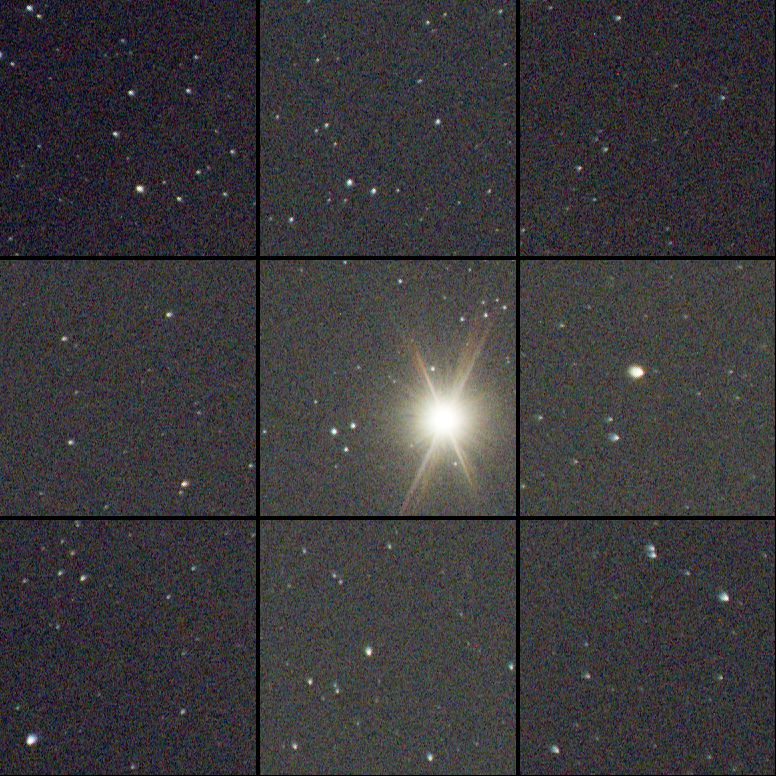
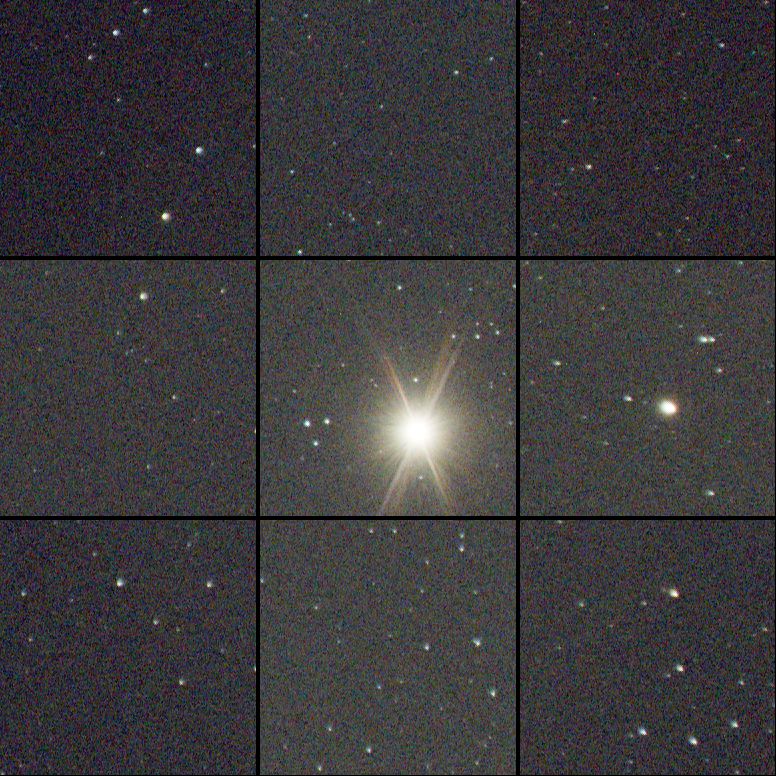
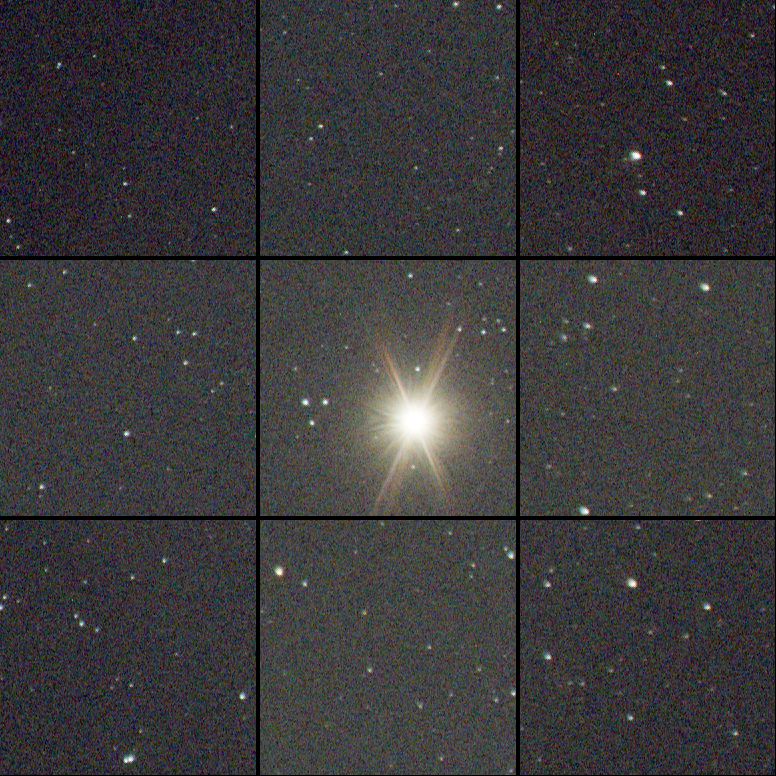
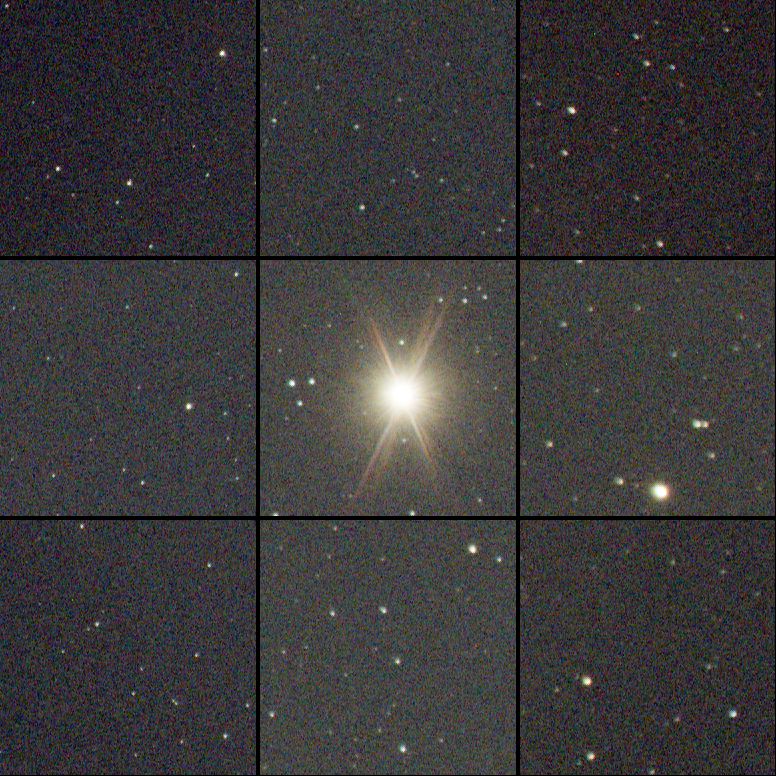
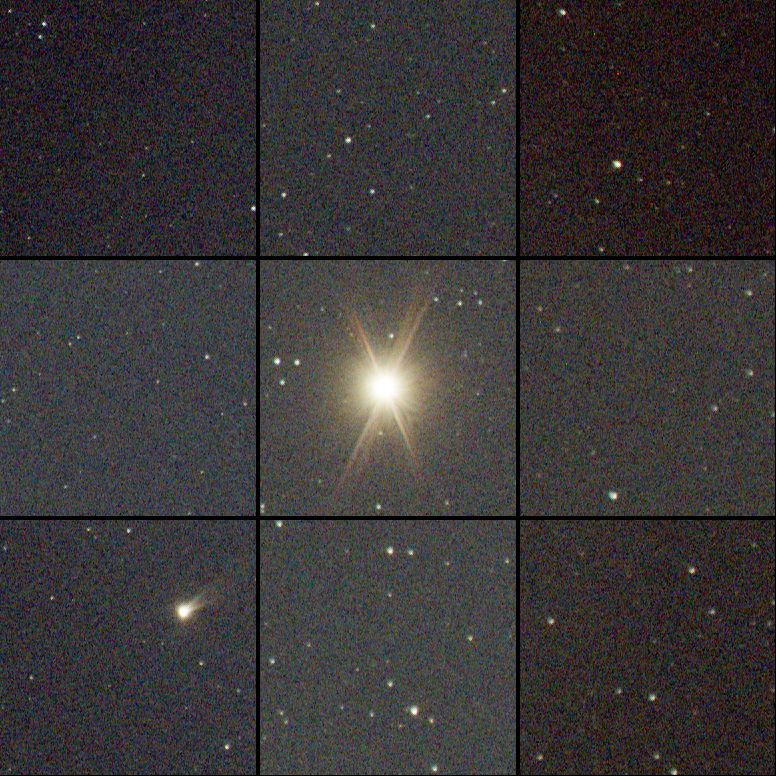
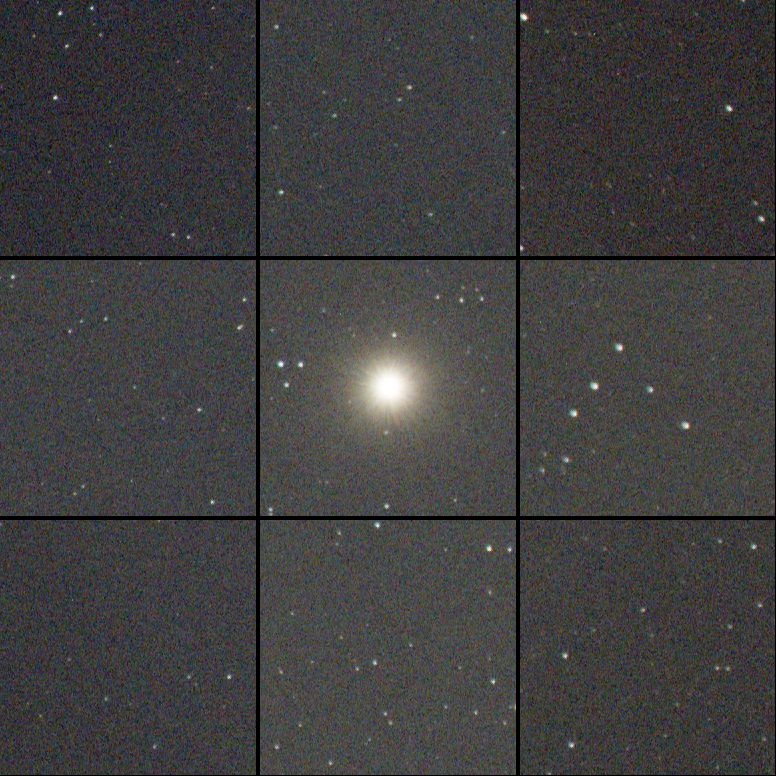
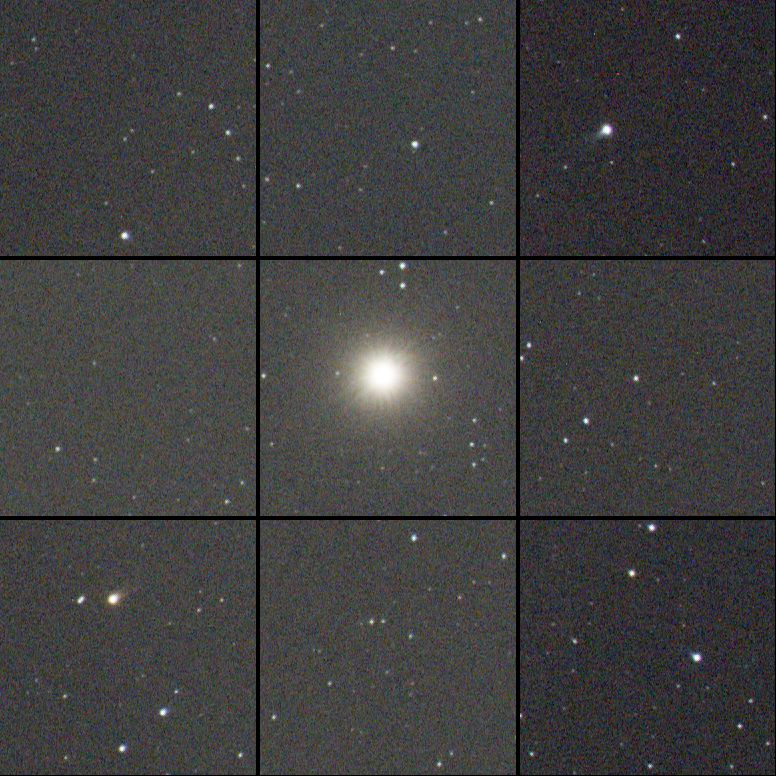
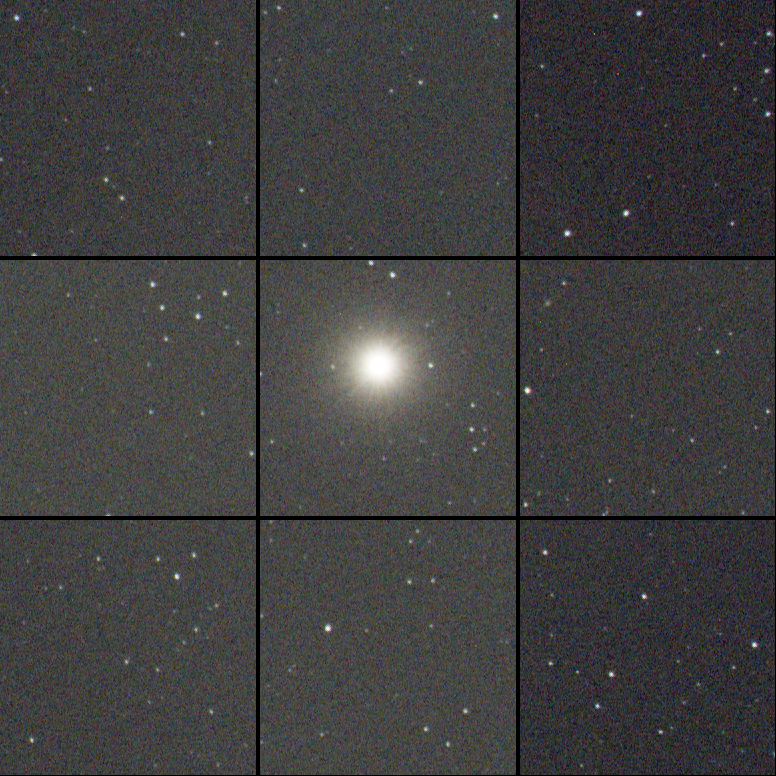
Since the quick tests with a sensor distance of up to 57.0 mm did not yield to a satisfying result and some authors in the net tell about significantly larger sensor distances than the WO specified 55,0 mm, I extended my tests up to a sensor distance of 58.0 mm.
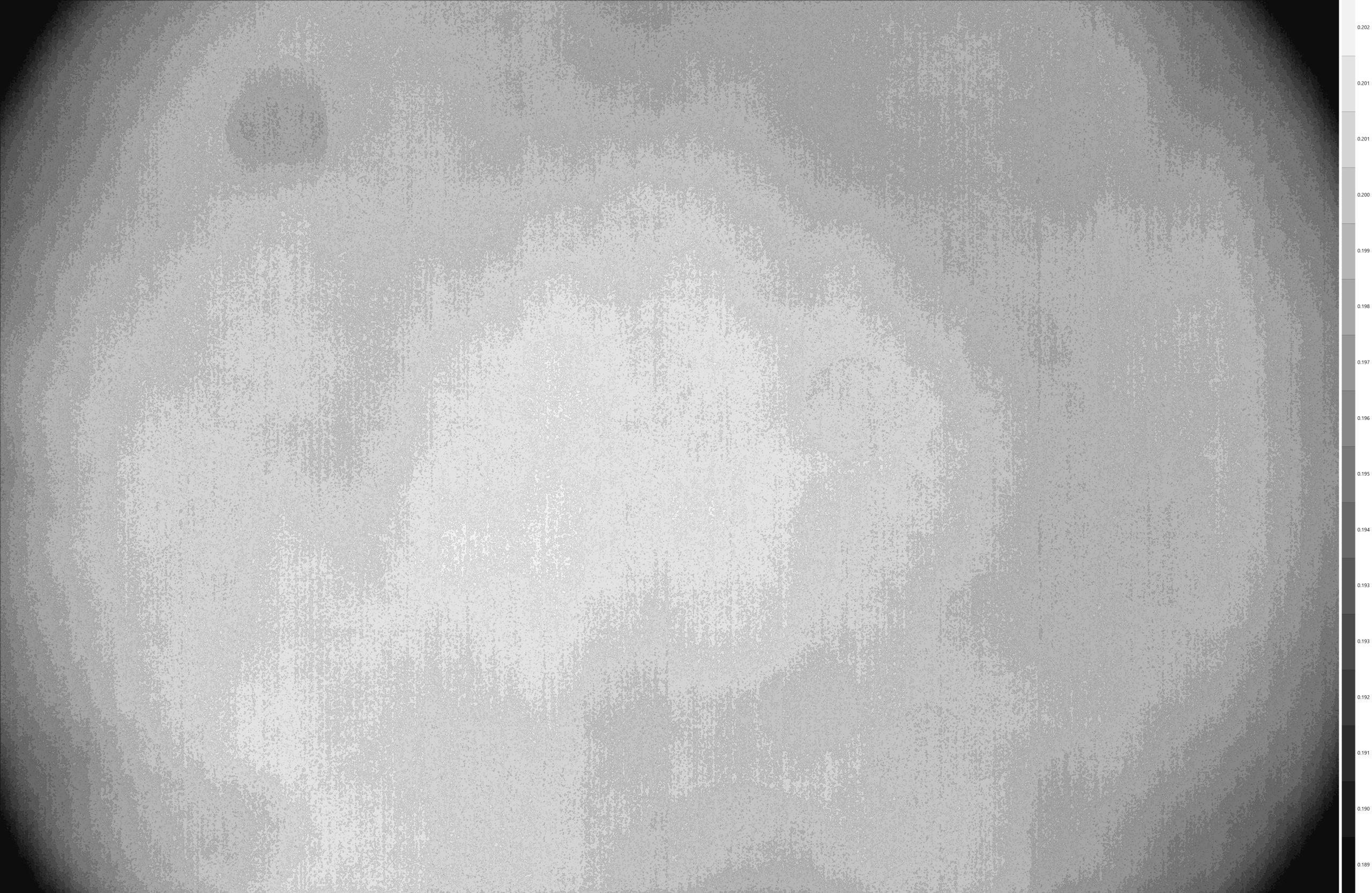
These test photos have been conducted during two nights. In order to get a good comparability, the distance of 57.0 mm was shot at both nights. Surprisingly the „spikes“ at the bright star occur only during the first night. Looking at the corners of these pictures it seems that the sensor distance of 58.0 mm gives the best results. Hence this distance is my base for my further work. The field illumination is almost perfect. If you evaluate the illumination, you get 94% illumination in the outermost corners, which is almost nothing and can be easily compensated by flat field calibration. It is an interesting question, whether the illumination get better, if the M54 adaptor ist used.
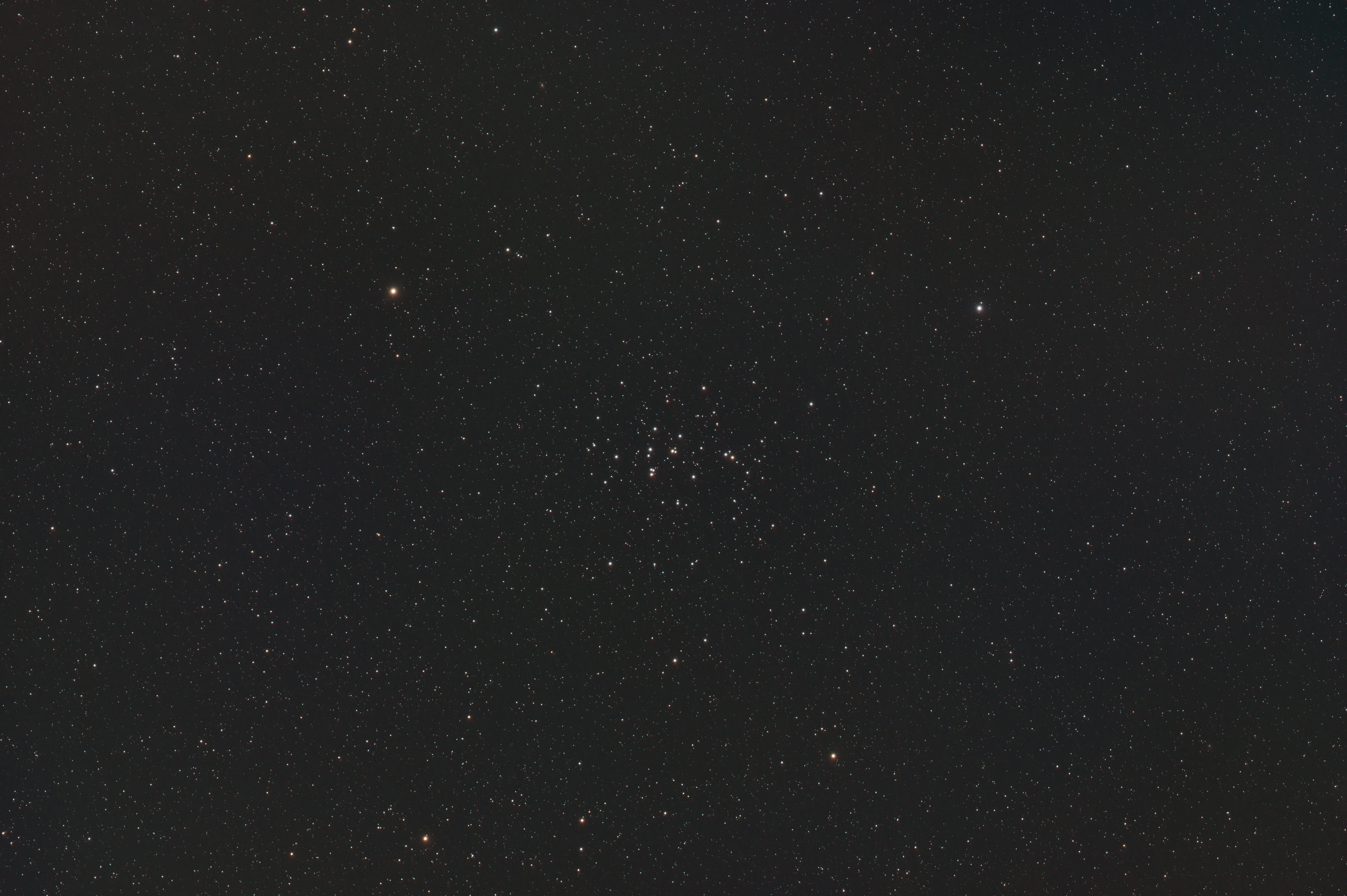
The photo of M 44 was taken with the same setup as the 58.0 mm configuration. The clear glass filter was in the train, as well. Here is a single frame with 120 s exposure time presented. The processing has been reduced to an absolute minimum: calibration, color calibration, noise reduction, stretch. The File behind the picture link is unscaled, i.e., it is in the original scale of the system. This allows the reader to zoom in for „pixel peeping“.
Conclusion
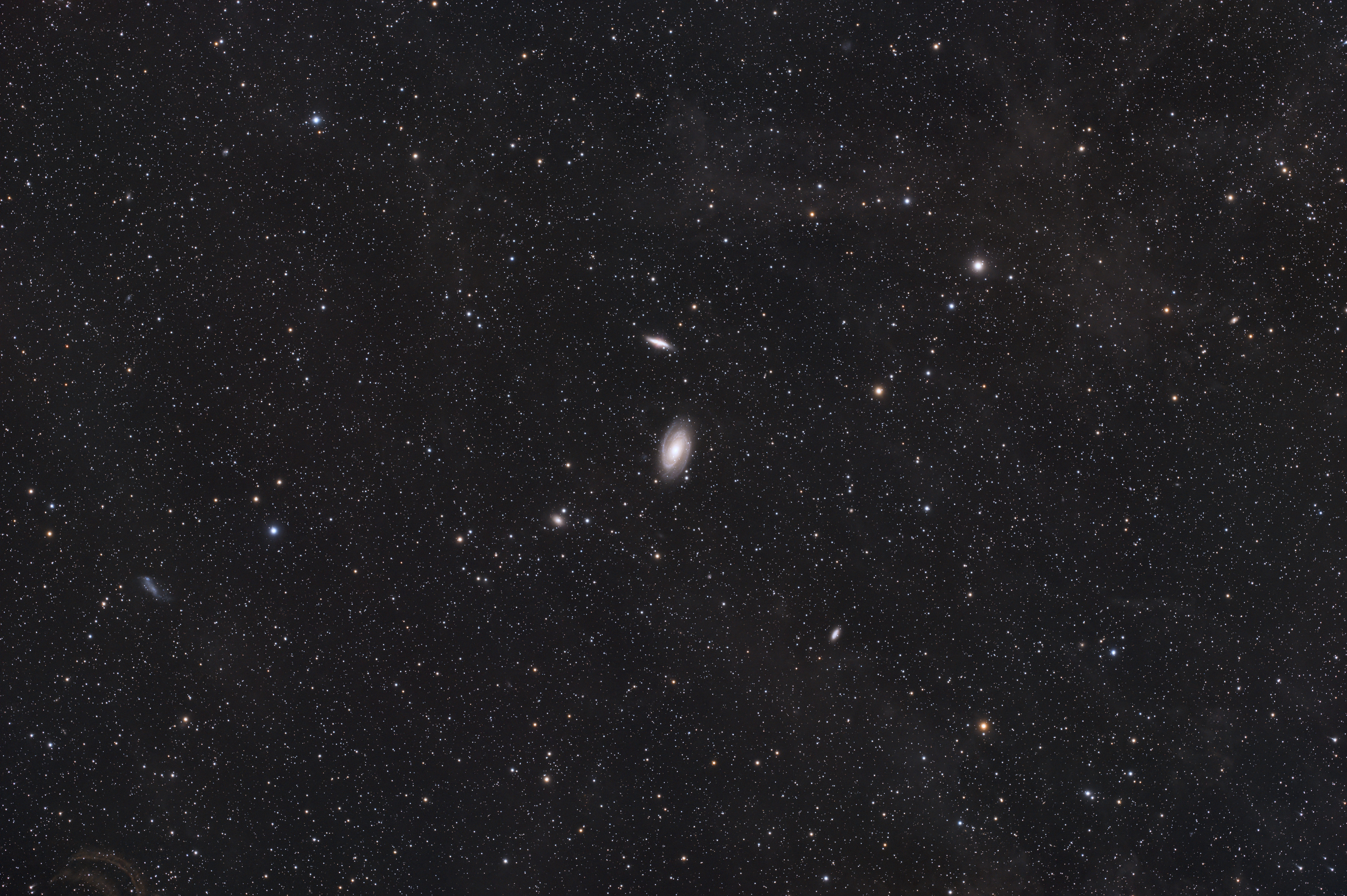
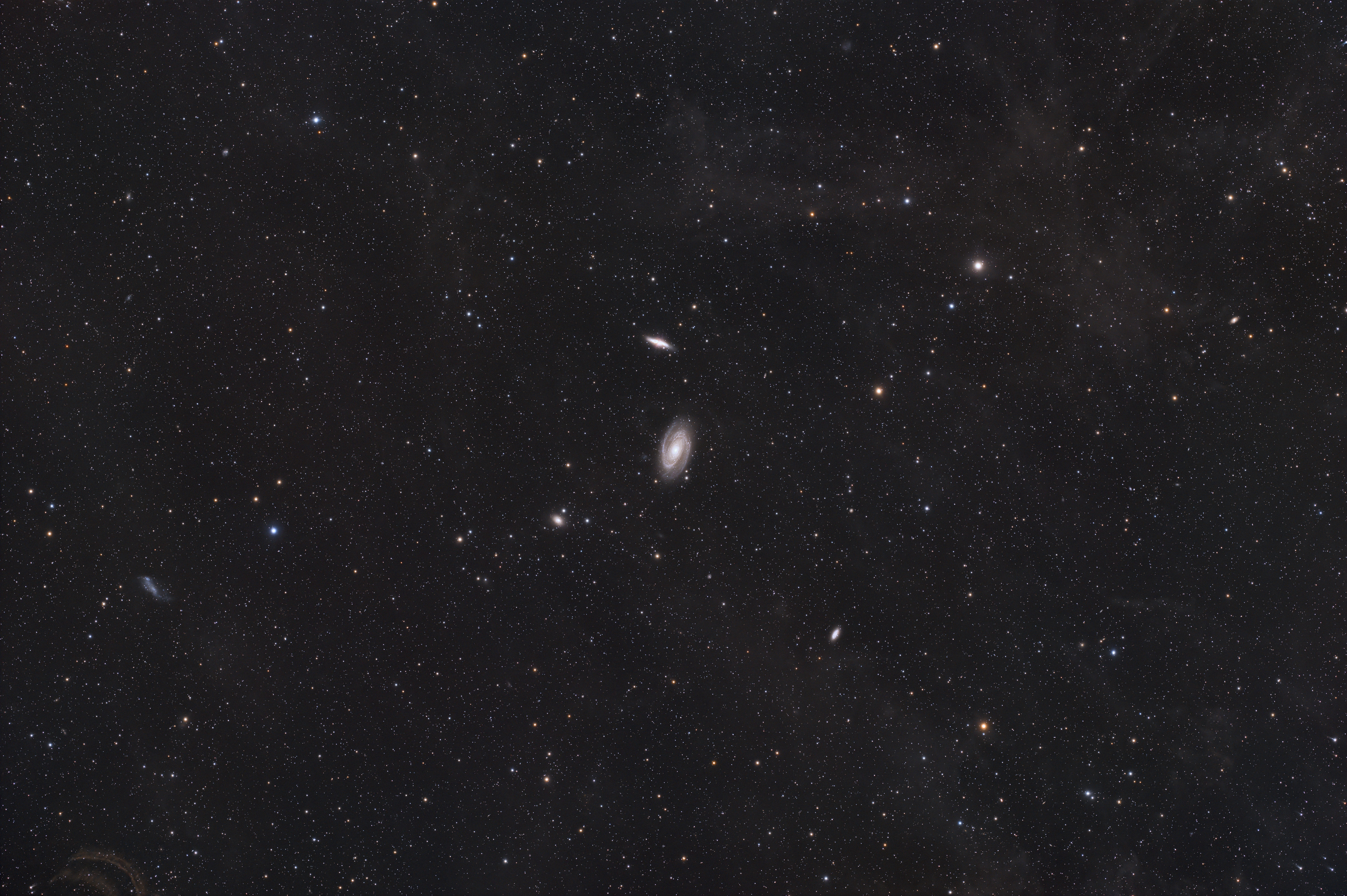
The Pleiades 68 will stay in my tool box. It fulfils my expectations and performs quite good in combination with a full frame sensor. It offers a good balance between imaging performance and portability. The test shot in this section of M 81 and M 81 with their vincinity demonstrates the full potential of this set-up. Since I was interested what more powerful processing tools would reveal, I added a higher processed version of it here, as well. Again the files behind the picture links are unscaled, i.e., in the original scale of the system.
The imaging performance with a full frame sensor is not perfect, but doubtlessly at a very high level. Due to its larger pixels I would rather recommend the IMX 410 than the IMX 455 as a suited sensor. In my opinion the Pleiades 68 is of good mechanical quality, as well. The focuser operates discreetly and manually driven backlash is not noticeable. The focus position is definitely temperature dependent, but seems not too sensitive.
The William Optics specification of focal length and sensor distance deserve a few words. Both values do not match at my scope. WO specifies a focal length of 260 mm and hence a focal ratio of 1:3.8. My astrometry calculated a focal length of 270 mm, which results in a focal ratio of 1:4. The sensor distance is listed by WO with 55 mm. I got the best results at 58.0 mm (including 2 mm filter).
For the sake of completeness, it should be pointed out that WO already indicates the particular criticality of the sensor distance on the product page. This is apparently also a decisive difference from the RedCat series, which is significantly less critical due to the underlying Petzval design.